
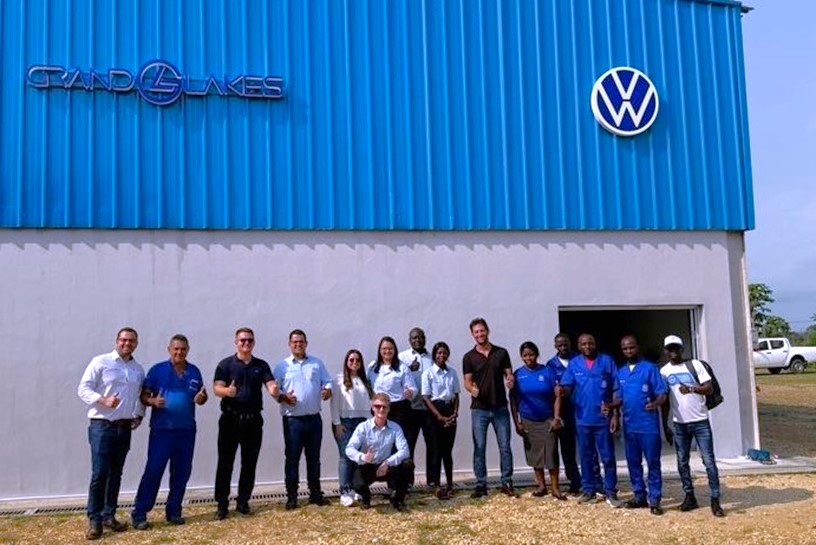
Volkswagen Caminhões e Ônibus (VWCO)´s representative, the company has been the market leader in the region for 10 years
|

Grand Lakes Veículos opens new branch in Angola and invests in parts replacement to grow in 2024

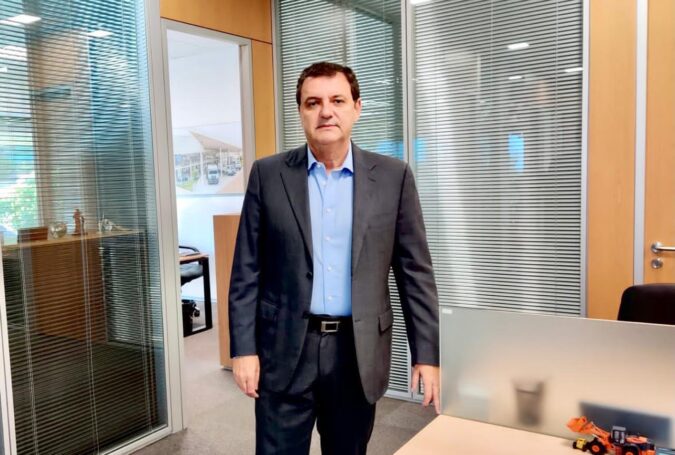
Grand Lakes Veículos, a company that belongs to Adone Holding and has been operating in the heavy vehicle segment on the African continent since 2007 as the official dearlership of the Volkswagen Caminhões e Ônibus (VWOC) brand, has just opened a new branch in Angola, Africa, with the Focus on selling units and spare parts. With 8 thousand square meters, it is the third unit in the country and is located in the province of Cabinda. “It is another significant step in the company’s ongoing commitment to offering quality products and services in the region”, celebrates the General Director, Geraldo Kulaif, who foresees a year with expansion of the brand in the region where it stands out for its excellent service in the post- sale. Initially, the new store has models from the Constellation and Delivery lines in its portfolio and is expected to expand in the coming months.

Grand Lakes Veículos is a representative of Volkswagen Caminhões e Ônibus (VWCO), the company has been the market leader in the region for 10 years.
Volkswagen Caminhões e Ônibus (VWCO)´s representative, the company has been the market leader in the region for 10 years. (Photo: Divulgation)


Grand Lakes Veículos has been the market leader in Angola for 10 years in the segment, with a central dealership in the capital Luanda and now two branches – one in the province of Benguela and the other in the province of Huila. “We want to generate more and more jobs in the country, offering the best products and services”, says the director of Grand Lakes, Geraldo Kulaif. In addition to buses and trucks, the units offer customers the convenience of purchasing original Volkswagen parts and accessories. There are more than 8,600 items, which can be purchased in person or through a delivery service throughout Angola. “This is a very promising market for us in 2024 due to the sharp growth in demand for maintenance parts”, adds Geraldo Kulaif.

The company’s results include sales of trucks from the Worker, Constellation and Delivery lines. Recently, the country reached the milestone of 1850 Volksbus, used mainly for the urban mobility restructuring program and improving public transport for the entire population. “We are extremely proud to be able to participate in the country’s development in a sustainable way, helping to improve the quality of life of citizens”, says the chairman of the Board of Directors of Adone Holding, José Roberto Colnaghi.

Colnaghi points to accurate strategic planning as a fundamental tool for success on the African continent. The company selected a group of models thinking about meeting the needs of the region, import logistics, spare parts and specialized training to satisfy the customer during and after the purchase. “We invest a lot in after-sales, today we have a team of 200 employees, 80 of whom are mechanics trained by Volkswagem Caminhões who undergo annual recycling promoted by the brand and, in a 3.5 thousand square meter warehouse, we have a stock of spare parts evaluated at US$8 million”, highlights José Roberto Colnaghi.

According to José Maurício Caldeira, shareholder and advisor at Adone Holding, the prospects for expansion on the African continent are increasingly greater. “We have the technical and human capacity to increasingly participate in local development and this brings us excellent prospects”, points out Caldeira.

In 2023, Grand Lakes Veículos received the “Innovation Highlight – High Performance Program” award, granted annually by VWCO to importers in Latin America and Africa.


Urban mobility

Since 2019, Grand Lakes has worked in partnership with the local government and technology and mobility experts on the Regular Urban Passenger Transport Project (TURP), whose objective is to map and define the main operational routes and select urban and interprovincial bus stops , enabling the daily transport of thousands of people. “Our main strategic objective with these terminals is to offer, in addition to quality transport, safety and improvement in the lives of a population that needs it so much”, highlights Geraldo Kulaif.


ESG

Since March 2022, the company has also participated in the Integrated Rural Commerce Development Program (PIDCR), led by the federal government. The objective is to improve the flow of products from the countryside to consumption areas and boost the growth of the rural sector. “This program has the potential to generate more than 5,000 indirect jobs,” says Kulaif. The 200 vehicles delivered by Grand Lakes are subsidized by local authorities to rural producers and distributed throughout the country.

In the social area, it has supported the activities of the NGO Baluarte (https://baluartenomundo.org/sobre-nos/), from Luanda, since 2018. It is the Institution’s largest partner, which serves more than 3 thousand children in situations of social vulnerability. Last year, Grand Lakes Veículos donated a vehicle and land measuring approximately one hectare to expand its service capacity, including technical courses for professional training. It also built a high-standard library for children with the aim of enriching the educational environment.


 

Posts Similares

  • |

    The VW Delivery 11.180 Dominates the Truck Market in 2025 in Brazil

    Volkswagen Trucks & Buses has another competitor to add to its list of best-selling models. According to data from Fenabrave, the Delivery 11.180 not only established itself as the best-selling truck in the market last year but also led the preference of transport companies when they need a medium-sized truck. The model recorded a total…

  • | |

    Brazilian startup launches game to play on the blockchain

    Reward Hunters Token launches in the United States the first Brazilian game integrated to the Blockchain market focused on player Vs player battles: Battle of Sotiras. “We gathered what is most competitive in Battle Royale and linked it to a single game within the Blockchain”, announces Leandro Baccari, head of the Brazilian company. His expertise…

  • |

    Justin Trudeau announces Canada’s Ambassador to the United States

    Canada and the United States enjoy a unique and strong relationship based on deep people-to-people connections, shared geography, common values and interests, and mutually beneficial economic and security ties. The Prime Minister, Justin Trudeau, today announced that Kirsten Hillman has been appointed as Canada’s Ambassador to the United States. Ms. Hillman has served as Canada’s Acting…

  • |

    Impactos da adoção do Pix Cobrança precisam ser mensurados nos processos operacionais das instituições

    Ao completar seis meses desde o seu lançamento, não resta dúvida de que o Pix já faz parte do dia a dia dos brasileiros. Segundo o Banco Central, no dia 16 de maio, data da comemoração de seu primeiro semestre de existência, a ferramenta contava com mais de 242  milhões de chaves cadastradas, sendo 83 milhões de usuários pessoas físicas e mais de 5,5 milhões de empresas. O BC estima que aproximadamente 75 milhões de brasileiros já usaram o Pix para pagar ou receber, o que significa 45% da população adulta do país. Mesmo estes números superlativos, representam apenas o começo da jornada de um instrumento de pagamento que deve ser ainda mais representativo, já que uma lista de outras funcionalidades já tem data marcada para entrar em funcionamento e atrair ainda mais pessoas e empresas para o mundo dos pagamentos instantâneos. Quando avaliamos com mais profundidade o Pix Cobrança por exemplo, que por característica tem um funcionamento muito similar ao de um boleto – a partir de 1º de julho todos os participantes do Pix precisam ser capazes de fazer a leitura do QR Code e possibilitar o pagamento para data futura – existem aspectos envolvidos na adoção desse mecanismo que precisam ser avaliados pelas empresas para, por um lado, aproveitar ao máximo sua potencialidade, e por outro lado, evitar problemas decorrentes de um descompasso entre a velocidade do Pix e um ritmo eventualmente mais lento das estruturas e processos de atendimento ao consumidor. Só para exemplificar, basta analisar a situação de uma distribuidora de energia elétrica. Imaginando que a ordem para cortar o fornecimento de luz de uma residência por inadimplência tenha sido dada e no meio do caminho aquele débito tenha sido quitado com uso do Pix. Legalmente, aquela falta de pagamento deixa de existir imediatamente, mas se o funcionário responsável pelo corte não tiver acesso a essa informação, o serviço será executado, e o consumidor prejudicado indevidamente. Quanto isso pode custar em termos de processos judiciais e arranhões na imagem da empresa? Para evitar que estes prejuízos aconteçam, é fundamental que os  pagamentos via Pix sejam atualizados e disponibilizados instantaneamente ao time operacional. O mesmo tipo de cuidado deve ser aplicado em operações de crédito. Com o Pix, o score dos tomadores de empréstimos e financiamentos se tornará muito mais  dinâmico podendo se transformar rapidamente dentro do mesmo dia. Pela manhã a pessoa pode constar com uma pendência e no meio do dia isto não ser mais uma verdade. Para decisões mais assertivas e um processo mais fluido, as ferramentas de análise de crédito deverão também contar com atualizações on-line dos recebimentos via Pix. Outra situação que merece atenção é que, como o Pix permite pagamentos em finais de semana e feriados, estes recursos, que antes eram contabilizados apenas em dias úteis, agora passam a ficar disponíveis na conta das empresas imediatamente. Desta forma, para não deixar de rentabilizar esse dinheiro, as organizações precisam se preparar e prever a aplicação dos recursos originados pelo Pix creditados em dias e horários não úteis. Estes são apenas alguns exemplos que deixam clara a necessidade de ajustes em rotinas (sistêmicas ou não), as quais se iniciam sob o prisma financeiro, mas que podem repercutir em tesouraria, contabilidade, impostos, crédito e operações. E isto, pelos números apresentados no início deste texto, deve ser…

  • |

    The ability to adapt to customers’ needs will dictate the survival of retailers post COVID-19

    The COVID-19 pandemic has taken over the world, forcing people to find different and safe ways to perform most daily tasks. Picking up the mail now is more than just going outside and grabbing packages – it’s become a ritual that entails masks, gloves and a full sanitizing wipe down before you can get your…