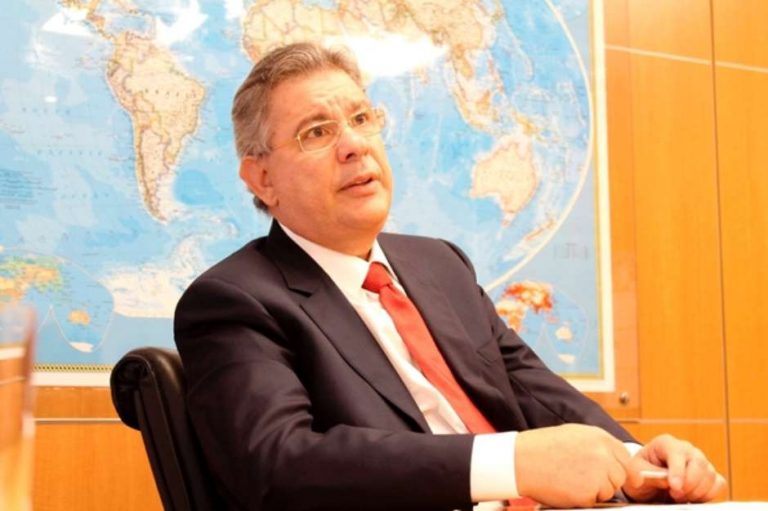


The successful history of the executive José Maurício Caldeira
José Maurício Caldeira is a successful entrepreneur. With a degree in Business and Accounting, he has come a long way to become a partner and advisor of Asperbras. The company, which began in the field of agricultural implements for irrigation, is now recognized for the quality of the products manufactured by its tube industries, PVC connections and Rotational molding and has become a large business group with operations in various areas.
The holding company goes from agribusiness to the manufacturing of MDF plates, including development of real estate ventures, and operations in the food, mining and power generation sectors. Nowadays, the group operates in almost all of Brazil and in three other continents: Africa, Europe and South America.
“Every professional who is dedicated to something different, in order to specialize , dreams of one day having international experience,” says Caldeira, “but I never imagined that I would work in the leading role in the development of countries with such great challenges, such as Congo and Angola.
Study, work and entrepreneurship
The executive began his career in accounting offices when he was only 13 years old. At the age of 18, while studying business administration, he was already the responsible accountant in a medium-sized company and lectured at Teco Contabilidade, in São José do Rio Preto.
In 1994, after working for ten years as an administrator in a dealerships and tire sales network, Caldeira founded its own consulting business, JMC Consult, today a personal investment company. In 2002, he was appointed to the brothers Roberto and Francisco Colnaghi, owners of Asperbras, to assist in the internationalization of the company, which was about to acquire the first account in Africa.
Post-war
Upon arriving in Angola, Caldeira was faced with a post-war scenario. “Most of the opportunities, or almost all of them, were because you had a country to be rebuilt there,” he says. What began as a trading business changed as entrepreneurs realized the local demands. Soon, an industrial district was developed to meet needs such as the supply of basic building materials.
There was, however, a great cultural barrier that resulted in conflicts going from working hours to work posture. “Our strategy was to respect the culture, invest in education, identify the best employees and give them a condition to serve as an example. Today, we have a very low turnover in Angola. There are people who have been with us since the beginning. Many Angolans who entered without any training now hold management positions. It was a rewarding experience to see how much everything has evolved,” he says.
Congo
With the experience of ten years in Luanda, in 2011, José Maurício Caldeira took another step next to Asperbras. This time, the group invested in a new industrial district in Brazaville, Congo. Asperbras had more than five thousand employees in Congo. And the great challenge imposed at the beginning of the project was to deal with a country whose native language is French.
The key strategy to develop the work was to hire Portuguese professionals who could make the communication flow in Portuguese and French. “All the drivers who work at the head office today also speak Portuguese, so it’s not just inside the offices. These people are self-taught, they’ve learned from the Internet and from everyday conversations”, says a proud José Maurício Caldera.
Watching the problems closely
Even with his history of great challenges overcome, the executive says he is cautious and responsible for watching the problems closely. “Fear is important, it makes us think and rethink, redouble our attention to planning and avoid mistakes, but we must be careful not to miss great opportunities,” he says. For him, that’s why his partnership with the president of Asperbras, José Roberto Colnaghi, is so productive. Colnaghi’s optimism and confidence are pondered by Caldeira to achieve balance in decisions.
Investments in Brazil
In 2018, the same period in which Brazil went through a very troubled economic phase, Asperbras demonstrated faith in the country with bold investments in diversified segments. It inaugurated an MDF plant in Água Clara (MS), the GreenPlac; the UTEE Antônia plant, a sustainable plant in Guarapuava (PR); Abitte, a new brand for real estate project that launched its first venture in Birigui (SP) and is preparing to inaugurate the second Bonolat dairy plant in Penápolis (SP).
Road to success
When asked about the secret of his success as an entrepreneur, José Mauricio Caldeira points out that his advice is the same for any profession that someone decides to follow: to seek the maximum qualification. “My generation was able to compensate with physical work what was lacking in professional training. The market waited a while, but the current generation does not wait”, analyzes the entrepreneur. “Today’s professional, with 22 years of age, has an excellent basic education. You will find a more competitive market, so young people should try to gain qualification from an early age. It’s important to get out of social networks, fake news, and look for courses that open up new perspectives. There are no excuses, there are several free courses on the Internet,” he says.
And for those who look for an opportunity he warns: “I don’t look for genius to work with me, I look for committed people. I don’t want hyper-trained people, but I want people who want to give themselves the opportunity, to seek formation, to seek specialization and never to stop. The market, in fact, seeks people with this profile.